• Quiénes Somos
  • Qué Hacemos
  • Cultura
  • Noticias
  • 25 Aniversario
  • Contacto
ESPAÑOL | ENGLISH

Drago

  • Quiénes Somos
  • Qué Hacemos
  • Cultura
  • Noticias
  • 25 Aniversario
  • Contacto
ESPAÑOL | ENGLISH

9 July 2026 by Matt

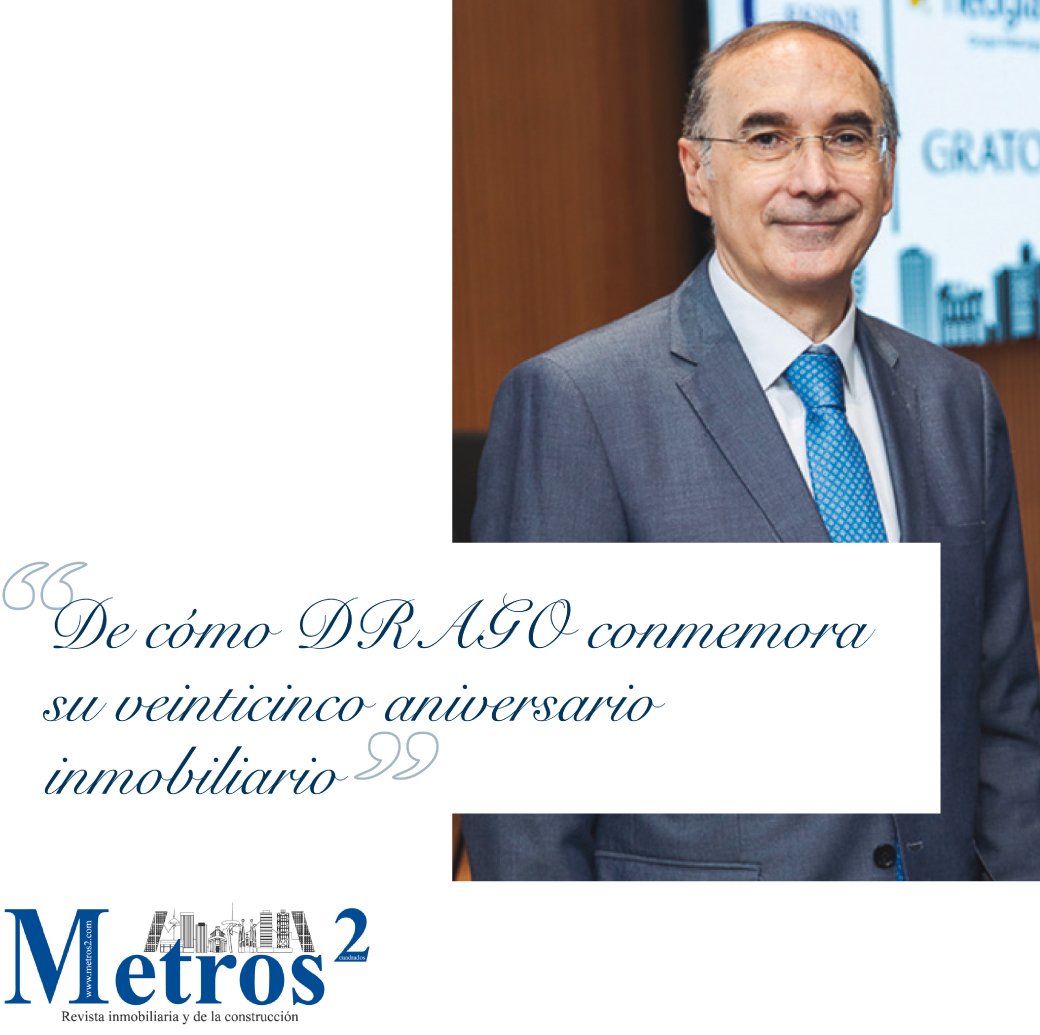
José María Álvarez, director of Metros 2 , dedicates this article to reviewing DRAGO’s history on the occasion of its 25th anniversary. Below, we reproduce in full the text published in May 2026.

Metros 2, José María Álvarez · Director of Metros 2, May 2026

Luis Iglesias, founding partner and CEO of DRAGO, has the honor of celebrating the company’s 25th anniversary. DRAGO is an independent platform dedicated to the most significant real estate investment and management in the Iberian Peninsula.

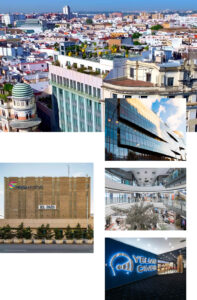
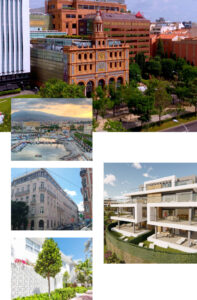
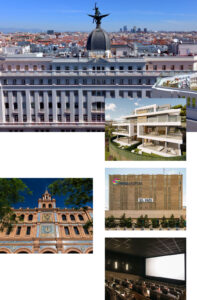
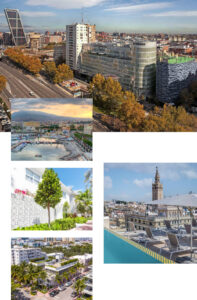
With a highly experienced and top-tier team of professionals, they have spearheaded numerous projects in this sector over the last quarter of a century. A prime example is the innovative development of the former ABC newspaper headquarters on Serrano Street in Madrid, now a shopping center in the heart of the city. Other notable projects include the commercial renovation of the building at Gran Vía 32, home to Primark and the SER radio network, and the Castellana 198 and 200 projects on a major thoroughfare in the capital. They also have a presence in Seville, with their work on the Hotel Querencia.

Internationally, they have also made their mark in Portugal with the complete renovation of the building known as Casa de Santos. And finally, the company also has a presence in the United States. The list is too long and the space too short to fully capture the extensive investment journey undertaken over this period. What is worth highlighting, however, is that year after year they have managed to establish themselves as one of the major players in the national investment landscape.

It currently manages a real estate portfolio exceeding four billion euros. It has twenty-six structured investment vehicles and manages over two million square meters of real estate. These figures have positioned it at the top of the real estate ranking in terms of transformation and value creation in such a competitive sector as the real estate market. Anyone curious enough to visit its corporate website can easily verify these details.

In addition to the impressive operational track record achieved throughout the aforementioned period, it is worth highlighting its management team, one of the most specialized in the country. In this regard, and as they explain, their investment model has always been based on conducting a thorough strategic analysis, institutional co-investment, and very active management.

Thus, throughout their history, they have participated in complex transactions across subsectors of the real estate market, such as offices, residential, retail, hotels, and logistics. In short, they cover virtually every aspect of investment. Among their historical achievements, it’s worth noting that they were the first to launch an institutional fund back in 2006. They also participated in the first sale and leaseback transaction of a major group of branches belonging to Banco Santander. Furthermore, throughout their history, they have worked with internationally renowned investors such as Cerberus, PSP, TPG, and Starwood, among others.

Profitability and sustainability have also been hallmarks of the company, but above all, they emphasize independence and professionalism. These four pillars are crucial to their survival, having enabled them to reach this first quarter-century. And all this despite having had to contend with the Puyol family name at one point in their history, a relationship they severed last year. A clean slate.

It is not necessary in this humble forum to highlight the successes or failures of a company. That is the role of the readers’ good judgment, or, failing that, the judges’. What does deserve praise, however, is that a Spanish real estate company is leading the investment market, a dazzling arena where large international funds, both sovereign and private, and so-called family offices dominate the global landscape.

Filed Under: EN

4 July 2026 by Matt

EL CONFIDENCIAL, Ruth Ugalde July 4 2026

The crowning touch to the Castellana 200 complex. The entire corner where Reyal Urbis planned a hotel will be an ultra-luxury development, with apartments exceeding 400 square meters.

Twenty years have passed since Reyal Urbis acquired eight buildings from Restaura that were part of the “Manzana Castellana” project, a regeneration plan for the area bounded by this famous thoroughfare and the streets Félix Boix, Doctor Fleming, and Carlos Maurrás. The goal of Rafael Santamaría’s development company was to create a complex, named Castellana 200, that would include offices, retail space, restaurants, an 844-space parking garage, and a five-star hotel.

But the bursting of the housing bubble led Reyal to one of the biggest corporate bankruptcies in Spanish history. His downfall came when part of this ambitious project, the hotel, which was to occupy the entire corner of Paseo de la Castellana and Calle Carlos Maurrás, was still under construction. In total, 20,000 square meters remained unfinished.

A litany of urban planning and corporate problems turned the building into a ghost property. It remained that way for 13 long years, until Drago managed to unblock it last year. As El Confidencial reported, the firm led by Luis Iglesias won the auction held by the bankruptcy administrators in February 2025, taking advantage of a right of first refusal it held.

Although initially considering maintaining the hotel project, Drago quickly decided to capitalize on Madrid’s strong housing demand to create one of Spain’s most iconic residential developments. This project, which has been in development for a year, aims to do something different: at a time when the concept of luxury has become commonplace, Drago has opted to return to the fundamentals and prioritize quality and exclusivity.

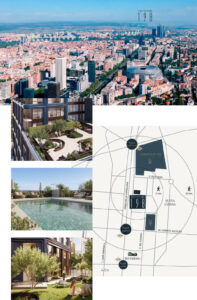
Therefore, despite covering 20,000 square meters, the residential complex will only have 62 homes, ranging from one to four bedrooms, with floor areas between 130 and 412 square meters each. These figures include the communal areas for each home, which will be one of the distinguishing features of this development, dedicating 2,000 square meters to exclusive amenities for residents.

Castellana 198 will feature a private club , a spa with an indoor pool, sauna and hammam, a gym, treatment rooms, a private cinema, a bar, a kitchen for gastronomic events, a wine cellar, a golf simulator, a kids’ club, interior gardens, storage units, and parking, in addition to an outdoor pool located on the upper floors of the building. Drago’s objective with this offering is to differentiate itself from the rest of the market by offering a new approach to high-end housing, prioritizing the possibility of carrying out much of daily life within the building, without sacrificing square footage in the apartments.

On the contrary, the dimensions of the future apartments buck the shrinking trend of the rest of the market. On average, one-bedroom apartments will have 81 square meters of usable space (130 m² built); two-bedroom apartments, which are the most numerous, will have 150 square meters of usable space (240 m² built); three-bedroom apartments will reach 195 square meters (315 m²), and four-bedroom apartments will have 256 square meters (412 m²).

“The project has eleven floors of homes ; the ground floor will be the entrance through a large lobby with a garden in the background, and the services for residents will be located in the first basement of the building, except for the outdoor pool, which will be on the eighth floor,” explains Mayte Medina, director of operations at Drago , who avoids revealing any price reference for the future homes.

Designed by the international firm Studio Seilern Architects and marketed by CBRE , these homes have already attracted interest from both domestic and international buyers, who have purchased half of the development in just three months. “In this first phase, we’ve seen a majority of investors, but we believe that in the second phase the percentage of end buyers will increase. We’ve had 40% Latin American buyers, and of the domestic buyers, 60% are from outside Madrid,” Medina points out.

Despite the summer season, management is confident of maintaining this sales pace in the second half of the year, which, if confirmed, would allow Drago to sell out this year. The developer plans to invest €100 million in the entire project, with an initial goal of completion by 2028.

“We are fully confident in maintaining a good pace during the second half of the year , supported by two very solid buyer profiles. On the one hand, there are investors, especially interested in smaller homes, who won’t want to miss the opportunity to be part of such an iconic project at Castellana 198. On the other hand, there are more emotional and family-oriented buyers, who know Chamartín well and for whom three- and four-bedroom homes are particularly attractive,” explains the operations director.

The crown jewel will be the five duplex penthouses located on the tenth floor of Castellana 198 , a project with which Drago aims to put the finishing touch on its 25th anniversary. Instead of demolition, the firm has opted to preserve the existing structure , originally designed for hotel use, and extend its lifespan by incorporating more contemporary sustainability and efficiency criteria.

From an architectural standpoint, the building’s façade stands out , composed of large glazed terracotta tiles in shades of petrol blue, natural stone, and expansive glass surfaces. Drago’s aim is to create a unique and recognizable image within the northern Madrid skyline, an area destined for profound transformation in the coming decades, as it serves as the gateway to the Chamartín Operation.

https://198castellana.com/

Filed Under: EN

25 June 2026 by Matt

THE OBJECTIVE 19 June 2026

Experts and mayors discussed mobility, housing, energy, and new technologies at an event hosted by THE OBJECTIVE

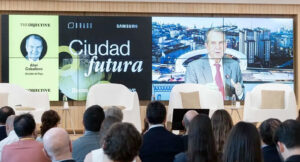
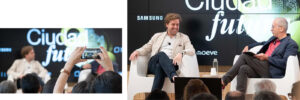
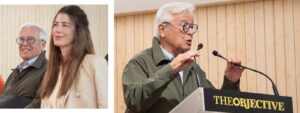
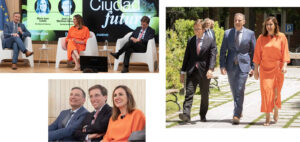
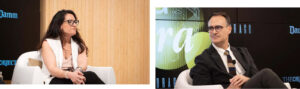
Housing, urban competitiveness, artificial intelligence (AI), and city regeneration were the focus of the third edition of Ciudad Futura (Future City), the forum organized by THE OBJECTIVE that brought together mayors, experts, and business representatives in Madrid on Thursday to discuss the main challenges facing Spanish cities in the coming years. The event, held at the Ortega-Marañón Foundation with the support of Drago, Samsung, Moeve, and Damm, emphasized the need to promote more livable and sustainable urban environments capable of attracting talent, investment, and economic opportunities.

More liveable and connected cities

During the event’s opening address, the mayor of Vigo, Abel Caballero, emphasized the role of cities as the “axis” upon which citizens’ quality of life is built and defended the need to promote more sustainable, accessible, and livable urban models. The mayor cited Vigo’s transformation as an example, highlighting the reclamation of public spaces, the creation of green areas, and the protection of its natural environment. “We have to remake the beaches, make them livable, and understand them as a place for people to come together,” he said. He also underscored the restoration of the estuary and the improvement of the city’s water infrastructure, insisting that “cities must call for action” in the face of challenges such as climate change and the management of increasingly scarce resources.

Abel Caballero also defended Vigo’s commitment to sustainable mobility and pointed out that the city boasts one of the world’s largest networks of mechanical mobility systems, including elevators, ramps, and moving walkways. “We are making urban transport the cheapest in all of Spain,” he stated. The mayor also called for greater autonomy for local councils in areas such as housing, education, and social services.

“The Spanish government provides resources to the autonomous communities, but they don’t always reach the housing sector,” he criticized, before pointing out that in Vigo, “the autonomous community has built zero affordable rental housing units in the last 18 years.” He also advocated for the integration of AI into city management and emphasized Vigo’s economic role as an industrial leader in sectors such as automotive, shipbuilding, and fishing. “We need to create a tourist city, but also a deeply industrial and economic one,” he concluded.

How to attract talent and investment

In a conversation moderated by José Manuel Calvo, Quality Director of THE OBJECTIVE, architect and urban planner Fernando Caballero reflected on the factors that determine the competitiveness of cities and their capacity to attract talent, investment, and economic activity. Caballero argued that cities function as “living organisms” and warned that the main challenge arises when “everything happens in cities and everyone wants to go to cities.”

During the discussion, he emphasized the importance of connectivity for driving economic growth, noting that “places that are connected grow,” citing the development of cities like Toledo and Guadalajara thanks to their transport connections. In this regard, he advocated for strengthening the rail network and improving connections to intermediate cities to prevent all economic and demographic activity from being concentrated in major capitals. “We need to create a metropolitan area,” he stated, defending greater integration between Madrid and surrounding municipalities and cities such as Getafe, Leganés, Alcorcón, and Ávila.

When asked about the elements that make a city attractive to businesses and workers, Fernando Caballero emphasized the need to combine “affordable housing, efficient, fast, and accessible transportation” with better integration of those arriving from other countries. The urban planner criticized the difficulties in having professional qualifications recognized and recounted the case of a Venezuelan judge who ended up moving to Miami due to the lack of opportunities to practice her profession in Spain.

He also warned that access to housing has become one of the main obstacles to competing with other major international cities. “If you have low wages and housing is expensive, you cease to be attractive.” Although he acknowledged problems such as gentrification and overtourism, he argued that “the problems of being a global city are preferable to the problems of declining cities” and advocated for promoting affordable, public, and subsidized housing to guarantee the future growth of large cities.

Technology with a purpose to improve urban life

At the Technology with Purpose panel, moderated by Marcos Sierra, representatives from Samsung and BMW analyzed the role that innovation and artificial intelligence will play in the development of the cities of the future, focusing on the need to create useful, accessible solutions adapted to the real needs of citizens. Miguel Ángel Ruiz, Brand Strategy & Innovation Senior Manager at Samsung, argued that the success of technology depends on its ability to integrate naturally into daily life.

“The best technology is the invisible kind,” he stated, before pointing out that “everything that will work is simple.” The executive explained that the company has more than 25,000 people dedicated to innovation and that the development of new products is based on constantly listening to users. “We are dedicated to making everything very simple, to eliminating barriers,” he asserted, while highlighting the importance of collaboration between government agencies and companies to promote innovative solutions. “Solutions emerge when we work together,” he affirmed, referring to public-private partnerships.

For her part, Pilar García de la Puebla, Director of Communication and Institutional Relations at BMW, agreed on the need to strengthen this collaboration and asserted that “no one can provide solutions alone.” During her presentation, she explained some of the advancements the company is already incorporating into its vehicles, such as hybrid systems capable of automatically detecting entry into low-emission zones and switching to electric mode without driver intervention. She also argued that the mobility of the future will be increasingly diverse and flexible, adapting to the needs of each region and each user.

Both García de la Puebla and Ruiz agreed that innovation requires regulatory stability, institutional support, and a greater commitment to talent. In this regard, the Samsung representative lamented the lack of a strong innovation culture in Spain and warned that failure is often penalized too harshly, a factor that, in his opinion, hinders the development of new technological initiatives.

Urban regeneration as an opportunity for cities

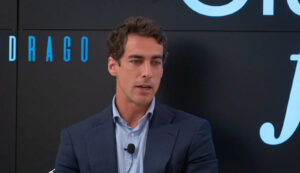
In a conversation moderated by Maite Rico, deputy director of THE OBJECTIVE, Germán López-Madrid, director of Acquisitions at DRAGO, analyzed the main challenges facing cities in terms of housing, urban regeneration and sustainability, advocating for the rehabilitation of buildings and the transformation of obsolete spaces as one of the keys to boosting urban development in the coming decades.

During his speech, López-Madrid warned about the existing imbalance between the creation of new households and the available housing supply. “There are 300,000 new families or people who want to move out on their own, but only about 90,000 homes are being built,” he pointed out. In this context, he explained that one of DRAGO’s key strategies is to give a second life to properties that have become obsolete over time. “We try to give them a new lease on life,” he stated, before recalling some of the projects developed by the company, such as the transformation of the building at Gran Vía 32, formerly occupied by offices of the Prisa Group, into the Primark store that became the largest in Europe. He also highlighted other projects that have allowed for the conversion of old bank buildings into hotels or the repurposing of former barracks for new uses.

The executive argued that urban regeneration not only increases the supply of available spaces but also helps revitalize degraded neighborhoods and areas. “Many properties were built in a certain era and become obsolete over time; we try to transform and improve them,” he explained. He cited as an example some unfinished or underutilized buildings along the Paseo de la Castellana and emphasized that the goal of these projects is “to breathe life into these areas” and generate a positive impact on the urban environment. He also stressed that sustainability is integral to all of the firm’s projects. “It’s non-negotiable.”

DRAGO is an independent real estate investment and management firm founded in 2000, with offices in Madrid, Lisbon, and Miami. Throughout its more than 25 years of experience, it has managed and transformed assets worth over €4 billion, focusing on rehabilitation, repositioning, and urban regeneration projects with an emphasis on creating sustainable value for cities and their inhabitants.

Joan Clos warns of a housing crisis

For his part, former Barcelona mayor Joan Clos focused his remarks on two of the major urban challenges facing Spain: the housing crisis and the need to promote large-scale urban regeneration. Clos argued that the housing debate often stems from a flawed diagnosis and reminded the audience that housing responsibilities are “essentially regional,” meaning that solutions must primarily originate from the autonomous communities. In his view, the main obstacle is the lack of sufficient funding to develop public policies for affordable housing. “Spain needs three million subsidized housing units,” he stated, before warning that current initiatives are insufficient to change market dynamics. “They build 2,000 homes here, 5,000 there, but that doesn’t change the underlying problem.” He also cautioned that access to housing continues to worsen while prices in the free market keep rising.

Clos also highlighted urban regeneration as one of the major challenges facing Spanish urban planning. The former mayor explained that much of the country’s building stock is quite old and that many cities need comprehensive interventions to renovate entire neighborhoods, not just specific buildings. “Spanish urban planning legislation is designed for urban growth, not urban regeneration.” During his speech, he recalled some of the projects he spearheaded during his time in Barcelona, ​​such as the transformation of the old town and the regeneration of a district, and argued that a reform of the regulations would allow for the recovery of degraded areas and the creation of new buildings to help solve the housing problem. “If we were to rethink urban regeneration in Spain, we would recover deteriorated parts of our cities and have a greater capacity to address the problem of housing affordability,” he concluded.

Artificial intelligence, energy and smart cities

The roundtable discussion “The Smart City: AI, Energy Communities, and Urban Services” featured David García Núñez, president of Madrid World Capital; Paula Santos, director of Electrification and Energy Communities at UNEF; and Santiago Molina, director of the Higher Polytechnic School at CEU San Pablo University. During the debate, the panelists agreed that technology, AI, and efficient energy management will be fundamental to addressing the urban challenges of the coming decades. García Núñez advocated for the need to “position Madrid and Spain as international leaders” in fields such as architecture, engineering, construction, and urban solutions, while Santos emphasized the importance of energy management for building more sustainable and resilient cities.

Artificial intelligence was a central topic of discussion. Participants analyzed how this technology can contribute to improving mobility, optimizing resource management, reducing pollution, and raising the quality of life for citizens. García Núñez pointed out that the role of AI will continue to grow in the coming years due to its ability to cross-reference data, improve planning, and “structure the territory” through practical applications in urban management. For his part, Santiago Molina focused on the impact this technological revolution will have on education and employment, emphasizing that judgment, creativity, and adaptability will continue to be key differentiators. “Nobody knows exactly what will happen with artificial intelligence in the urban sphere,” he stated, before arguing that all university programs should incorporate knowledge related to this technology to prepare the professionals of the future.

Almeida and Catalá

The day concluded with a conversation between the mayors of Madrid and Valencia, José Luis Martínez-Almeida and María José Catalá, moderated by the director of THE OBJECTIVE, Álvaro Nieto. During the meeting, Catalá publicly thanked the Madrid City Council for its support following the devastating storm that struck the Valencian Community, leaving 230 dead. The mayor asserted that “Spain did not fail them, but the Spanish Government did,” emphasizing that the first personnel deployed to assist the city came from Madrid. “On October 31st, the mayor of Madrid deployed a massive amount of personnel, equipment, and resources that still moves my city,” she stated, before recalling that nearly a thousand Madrid municipal workers participated in the emergency and recovery efforts.

Both leaders also addressed the housing situation, one of the issues that most concerns major Spanish cities. Almeida asserted that it is the “main problem” facing Madrid and defended the need to increase supply by releasing land and constructing new residential developments. The mayor also highlighted that housing permits have increased by 41% compared to the same period last year and advocated for measures to convert commercial buildings into affordable rental housing. For his part, Catalá explained that the Valencia City Council has promoted nearly a thousand public housing units and released land to develop some 13,000 new homes, in addition to launching a public rental agency to mobilize vacant housing.

Filed Under: EN

26 November 2025 by Matt

On November 26th, Madrid once again demonstrated that beauty, when born with purpose, can change lives. The Solidarity Xmas Tree Madrid 2025 gala brought together leading international luxury brands and a community determined to bid for something far more valuable than unique pieces: real opportunities for access to education and a legitimate future for children and young people who need it most.

During the week leading up to the event, the auction trees transformed the city into an unforgettable Christmas route. Displayed in boutiques on Ortega y Gasset Street and in Galerías Canalejas, they became symbols of creativity, craftsmanship, and a commitment to education as a tool for change.

This year’s auction featured trees created by Cartier, Chaumet, Chopard, Giorgio Armani, Hermès, IWC, Jaeger-LeCoultre, LOEWE, Maison Valmont, Ralph Lauren, Suárez, Stefano Ricci, Tod’s, and Zimmermann, in addition to DRAGO, which also participated in this charitable project with great enthusiasm.

The auction reached €751,000, an extraordinary sum that will be donated entirely to three admirable educational foundations: the Tacumi Foundation, the Dadoris Foundation, and the Alas Foundation. For them, each bid represents a turning point, a boost that transforms resources into accessible education and real social change.

For DRAGO, this year’s auction held special significance. In the midst of our 25th anniversary celebrations, we wanted to honor the occasion by supporting a cause that truly builds the future: education, the true engine of individual and collective progress. We enthusiastically participated in the auction and were honored to sponsor the Tree of Foundations, a symbol that embodies our commitment to social mobility, equal opportunities, and the transformative power of education.

It was also a privilege to accompany Anabel Zamora, Bettina Farreras, their team, and the Solidarity Xmas Tree Council, who, with tireless dedication, have made this gala a benchmark for solidarity in Spain.

At DRAGO, we will continue to support initiatives that remind us that when society unites, beauty is not just aesthetic; it’s impact. And education, without a doubt, is the most valuable luxury there is.


https://drago.com.es/wp-content/uploads/2025/12/CORTE-VIDEO-DRAGO-480.mp4

Filed Under: EN

Copyright © 2026 · Drago on Genesis Framework · WordPress · Log in

logo

España

Serrano, 67. Planta 2ª. 28006 Madrid
+34 91 781 57 00
+34 91 781 57 21
hola@drago.com.es

Portugal

Rua da Esperança, 9. 1200-655 Lisboa
+35 1 210 106 795
+35 1 210 106 793
lisboa@drago.com.es

Miami

1000 Brickell Avenue, Suite 1112.
Miami, FL 33131
miami@drago.com.es

Contacto para prensa

Cris Arana
ca@drago.com.es
©2025 DRAGO S.L. Política de privacidad Figaro Brands
Gestionar el consentimiento

Para ofrecerte la mejor experiencia, utilizamos tecnologías como las cookies para almacenar y/o acceder a información de tu dispositivo. Al aceptar estas tecnologías, nos permites procesar datos como tu comportamiento de navegación o identificadores únicos en este sitio. Si no aceptas o retiras tu consentimiento, algunas características y funciones podrían verse afectadas.

Funcional Always active
El almacenamiento o acceso técnico es estrictamente necesario para el propósito legítimo de permitir el uso de un servicio específico solicitado explícitamente por el suscriptor o usuario, o para el único propósito de llevar a cabo la transmisión de una comunicación a través de una red de comunicaciones electrónicas.
Preferences
The technical storage or access is necessary for the legitimate purpose of storing preferences that are not requested by the subscriber or user.
Estadística
The technical storage or access that is used exclusively for statistical purposes. El almacenamiento técnico o el acceso se utiliza exclusivamente con fines estadísticos anónimos. Sin una orden judicial, la cooperación voluntaria de su proveedor de servicios de Internet o registros adicionales de terceros, la información almacenada o recuperada únicamente para este fin no suele utilizarse para identificarle.
Marketing
The technical storage or access is required to create user profiles to send advertising, or to track the user on a website or across several websites for similar marketing purposes.
  • Manage options
  • Manage services
  • Manage {vendor_count} vendors
  • Read more about these purposes
Ver preferencias
  • {title}
  • {title}
  • {title}